FTC Safeguards Rule: U.S. Firms Must Document 9 Elements and Keep Audit Evidence
The FTC Safeguards Rule requires every covered financial institution to maintain a written information security program under 16 CFR Part 314, with administrative, technical, and physical safeguards spelled out in plain terms. The most urgent operational piece is newer: if a security breach exposes unencrypted data on 500 or more consumers, you must notify the FTC within 30 days of discovery. This article breaks down what to document, what to build first, and what auditors actually want to see.
TL;DR:
- Businesses involved in financial activities must implement and document all nine elements of their security program, including risk assessments and vendor oversight, to stay compliant.
- The breach notification requirement went into effect in May 2024, mandating reporting within 30 days of discovering unencrypted data exposure affecting 500 or more consumers.
- Small entities with fewer than 5,000 consumers are partially exempt but must still evaluate activity-based coverage to avoid misclassification.
- Regular testing and continuous monitoring are preferred, with documented evidence like scan logs, remediation tickets, and reviewable pull requests required for compliance.
- Automation tools like Vibeprod help small teams generate audit-ready evidence by identifying vulnerabilities and ensuring proper documentation of fixes.
Table of Contents
- What Is the FTC Safeguards Rule and Who Does It Cover?
- The Nine Required Elements of Your Information Security Program
- How Does the Breach Notification Requirement Actually Work?
- Are There Exceptions, and How Do You Avoid Misclassification?
- Your Compliance Checklist: What to Build and in What Order
- What Counts as Adequate Testing and Vendor Oversight?
- What Happens If the FTC Finds You Out of Compliance?
- A Practical Timeline for Getting and Staying Compliant
- How Automated Scanning Supports Your Testing and Monitoring Obligations
- Where Vibeprod Fits Alongside Your Compliance Program
- Where the Guidance Actually Comes From
- Where Compliance Programs Actually Break Down
- Sources
- FAQ
What Is the FTC Safeguards Rule and Who Does It Cover?
The Safeguards Rule comes from the Gramm-Leach-Bliley Act (GLBA), and its operational teeth live in 16 CFR Part 314. Sections 314.1 and 314.2 define who counts as a “financial institution” under this rule, and the definition is broader than most people expect. It is not limited to banks and credit unions.
The FTC uses an activity-based test, not a name-based one. If your business engages in activities that are “financial in nature” or “incidental” to financial activities, you’re likely covered, regardless of what you call yourself. That sweeps in a wide range of businesses:
- Mortgage brokers and lenders
- Payday lenders and check-cashing businesses
- Motor vehicle dealers that arrange financing or leasing
- Tax preparation services
- Investment advisors not otherwise regulated by the SEC
- Retailers that issue their own credit cards
- Career counselors specializing in financial services placements
The FTC’s 2025 guidance update specifically walked through how the amended Rule applies to nonbank institutions like motor vehicle dealers, noting the agency’s intent to clarify obligations while keeping the compliance burden proportionate to risk.
Two dates matter for your compliance calendar. The amended Rule’s core provisions, including the nine required program elements, took effect June 9, 2023. The breach-notification requirement came later and separately: it became mandatory on May 13, 2024. If your compliance program was built before 2024, there’s a good chance the notification piece was never fully implemented, and that’s the gap that tends to surface first in an FTC inquiry.
One nuance worth sitting with: coverage doesn’t hinge on how you’re licensed or regulated elsewhere. A business can be a “financial institution” under GLBA for Safeguards Rule purposes while having no bank charter, no lending license, and no obvious financial branding. If any part of your revenue comes from arranging, servicing, or advising on financial transactions for consumers, run the activity test before assuming you’re exempt.
The Nine Required Elements of Your Information Security Program
Section 314.4 lays out nine specific elements a written information security program must include. Skipping any one of them is a documented gap, not a stylistic choice. Here’s how to translate the statutory language into work your team can actually assign.
- Designate a Qualified Individual. This person needs documented authority, a defined reporting line, and responsibility for overseeing the program. It can be an employee, an affiliate, or a contracted service provider, but the designation itself must be in writing.
- Conduct a written risk assessment. Inventory where customer information lives, how it flows through your systems, and what could go wrong. This assessment isn’t a one-time PDF. It needs criteria for evaluating risk and for judging whether existing safeguards are adequate.
- Design and implement safeguards. This is where access controls, encryption, multi-factor authentication (MFA), and secure disposal procedures live. The Rule expects these controls to map directly back to the risks identified in step two.
- Test and monitor safeguards regularly. Continuous monitoring is the preferred standard; where that’s not feasible, annual penetration tests and periodic vulnerability assessments fill the gap.
- Train your staff. Security awareness training needs to be ongoing, not a single onboarding video nobody remembers.
- Oversee service providers. You need to select providers capable of maintaining appropriate safeguards and require them to do so by contract.
- Keep the program current. Reassess and adjust in light of changes to your business, new threats, or results from your own testing.
- Maintain a written incident response plan. This plan needs to define roles, communication steps, and remediation procedures before an incident happens, not during one.
- Require the Qualified Individual to report to the board (or senior management) in writing, at least annually. That report needs to cover the state of the program, risk assessment results, and any incidents from the reporting period.
Pro Tip: Auditors don’t ask “do you have MFA?” They ask “show me the policy that required MFA, the ticket that tracked its rollout, and the date it was completed.” Build every safeguard with a paper trail attached from day one.
Notice how heavily this list leans on documentation. The FTC’s guidance repeatedly signals that a certification alone, whether SOC 2, ISO 27001, or something similar, doesn’t substitute for a written, internally-tested program mapped to these nine elements. Certifications can support your case. They can’t replace it.
How Does the Breach Notification Requirement Actually Work?
Since May 13, 2024, the Safeguards Rule has included a mandatory reporting obligation that catches a lot of compliance teams flat-footed because it’s newer than the rest of the Rule and easy to overlook if your program predates it.
A “notification event” is defined as unauthorized acquisition of unencrypted customer information. If the data was encrypted but the encryption key was also compromised, it counts as unencrypted for these purposes, and you need to treat it as a reportable event.
The threshold and timing are specific and non-negotiable:
- Threshold: The event must affect a number of consumers meeting the Rule’s notification threshold to trigger the requirement.
- Deadline: You must notify the FTC as soon as possible, and no later than 30 days after discovering the event.
- Method: Notification happens through an FTC online form built specifically for this purpose.
- Trigger point: The clock starts at discovery, not at confirmation of full scope. Waiting until you have a complete picture of the damage before starting your 30-day countdown is a common and costly mistake.
The practical fix is organizational, not technical: name who owns this filing before an incident happens. Waiting to figure out who’s responsible for the FTC form while you’re also managing a breach is how organizations blow the 30-day window. Build a short internal runbook that identifies the filer, the legal reviewer, and the sign-off chain, and test it the same way you’d test a disaster recovery plan.
Are There Exceptions, and How Do You Avoid Misclassification?
Not every covered entity has to meet every requirement at full weight. Section 314.6 carves out exceptions for financial institutions that maintain customer information on fewer than 5,000 consumers. Those smaller entities are relieved of certain obligations, including the requirement for a written risk assessment in the same form larger institutions must produce, and some elements of the incident response and reporting requirements.
That exception is narrower than many small businesses assume, and misclassification tends to happen in a few predictable ways:
- Assuming “we’re not a bank” means you’re not covered, when the activity-based test says otherwise.
- Counting only active customers toward the 5,000-consumer threshold, rather than all consumer information maintained, including former customers and applicants.
- Believing a parent company’s compliance program automatically covers a subsidiary conducting its own financial activities.
- Treating outsourced data processing as someone else’s compliance problem instead of maintaining oversight obligations.
Before assuming an exception applies, ask three diagnostic questions: does any part of your business involve financial activity as defined under GLBA, does your consumer information count (including historical records) push past 5,000, and have you documented the basis for whichever answer you land on? The FTC’s own guidance on nonbank institutions is a useful gut check if your business model doesn’t look like a textbook “financial institution.”
Your Compliance Checklist: What to Build and in What Order
Turning nine statutory elements into a functioning program works better as a sequence than a wish list. Here’s a practical build order.
- Map your data first. Inventory every system that touches customer information, and document data flow from collection to disposal. This deliverable, a data-flow map, becomes the foundation for your risk assessment.
- Deploy your highest-leverage technical controls immediately. Encryption for data at rest and in transit, MFA across all access points touching customer information, and access reviews that catch stale permissions. Logging comes next, because you can’t investigate an incident you didn’t record.
- Formalize vendor relationships. Update contracts with service providers to require appropriate safeguards, and set a monitoring cadence rather than a one-time onboarding check.
- Set secure disposal schedules. Data you don’t need is data you don’t have to protect. A disposal policy with defined retention periods reduces your exposure surface directly.
- Train staff on an ongoing basis, not just at hire.
- Produce your four core deliverables: the written security program itself, the risk assessment report, the incident response plan, and a board memo summarizing program status.
Pro Tip: Treat your risk assessment as a living document with a revision date and a named owner, not a static file from your original compliance sprint. Auditors notice when the “current” risk assessment hasn’t been touched in two years.
The order matters because each deliverable depends on the one before it. You can’t write a credible incident response plan before you know where your data lives, and you can’t brief the board meaningfully without a completed risk assessment behind the summary.
What Counts as Adequate Testing and Vendor Oversight?
The Rule’s language on testing is principle-based rather than prescriptive, and that flexibility cuts both ways. It’s freeing when your risk profile is genuinely low. It’s a liability when you use it as an excuse to under-invest.
Continuous monitoring is the FTC’s preferred standard. Where continuous monitoring isn’t feasible for your environment, the Rule falls back to annual penetration testing plus periodic vulnerability assessments, and you need to document why you chose that cadence rather than continuous monitoring in the first place.
Evidence that holds up under review tends to include:
- Preserved scan logs showing what was checked and when
- Vulnerability-tracking tickets with a named remediation owner and a resolution date
- Penetration test reports paired with proof that flagged issues were actually fixed
- A documented rationale for your chosen test cadence, tied to your risk assessment
Vendor oversight under §314.4(f) follows the same evidentiary logic. You need contract language requiring service providers to maintain appropriate safeguards, plus a monitoring process that confirms they’re actually doing it, not just a signature on file. For businesses handling sensitive financial data through third-party platforms, reviewing how those partners handle customer data at the outset can head off a compliance gap before it becomes a contract renegotiation.
Pro Tip: If you can’t produce a vendor’s most recent security assessment or SOC 2 report on request, you don’t have oversight. You have a hope.
What Happens If the FTC Finds You Out of Compliance?
The FTC enforces the Safeguards Rule under its Section 5 authority over unfair or deceptive practices, and the remedies aren’t limited to a warning letter. The Commission’s enforcement history shows a consistent pattern: consent orders, independent biennial assessments imposed as a condition of settlement, and monetary penalties in more serious or repeat cases.
What actually reduces your enforcement exposure isn’t perfection. It’s evidence of a functioning, tested program:
- Prompt, complete breach notification when a qualifying event occurs
- Documented remediation with dates and owners attached to every finding
- Willingness to commission independent assessments when the FTC requires them
- Consistency between what you tell customers about your security and what your internal controls actually do
That last point catches more businesses than weak technical controls do. A company that markets itself as “bank-level secure” while running an outdated access control policy has created a deceptive-practices problem on top of a Safeguards Rule problem. Match your public claims to your actual program.
A Practical Timeline for Getting and Staying Compliant
Compliance isn’t a single project with an end date. It’s a recurring cycle with three distinct phases.
- Days 1 to 90 (immediate): Designate your Qualified Individual, complete a first-pass data inventory, patch your highest-severity vulnerabilities, and confirm encryption and MFA are active everywhere customer information is accessed.
- Months 3 to 9 (medium-term): Finish the full written risk assessment, renegotiate or update vendor contracts to include safeguard requirements, and run your first formal incident response tabletop exercise.
- Ongoing (annual and continuous): Maintain continuous monitoring or your scheduled penetration tests, deliver the annual board report from the Qualified Individual, and reassess your risk profile whenever the business changes meaningfully, whether that’s a new product line, a new vendor, or a new data type you didn’t handle before.
Set calendar reminders for the board report and the pen-test cadence now. Both are easy to let slide once the initial compliance push is behind you, and both are exactly what an FTC inquiry asks for first.
How Automated Scanning Supports Your Testing and Monitoring Obligations
Section 314.4’s testing and monitoring requirement asks for evidence, not intentions: logs, tickets, remediation timelines, dates. Automated repository and infrastructure scanning generates exactly that kind of trail, continuously, without requiring a dedicated security operations center.
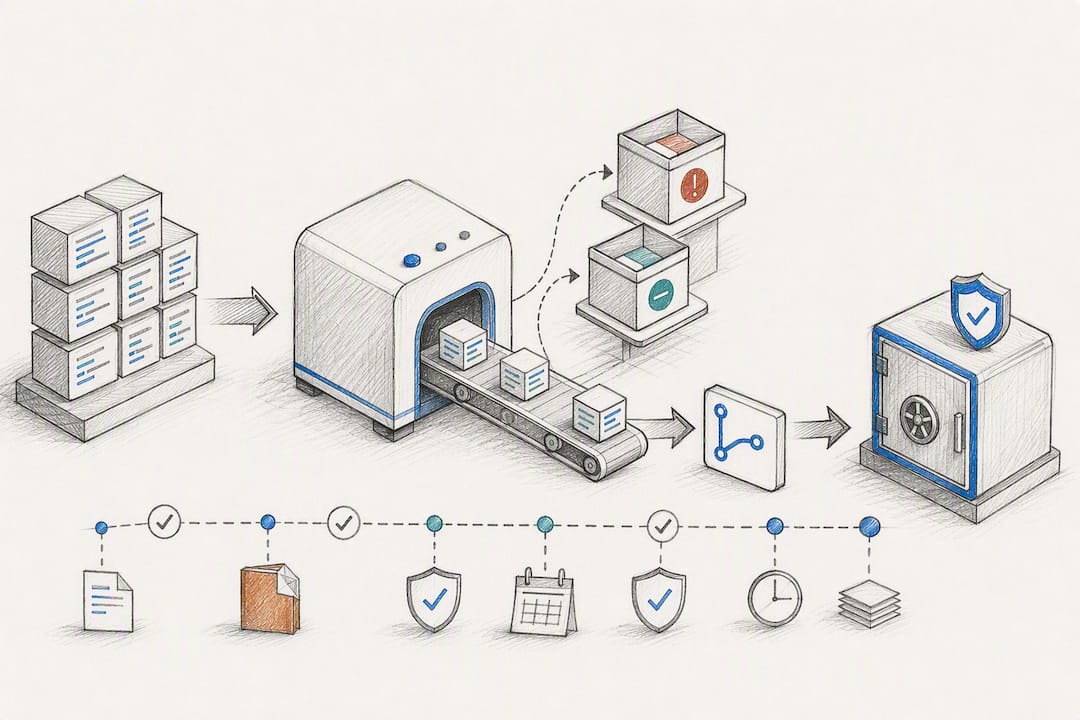
For small and mid-sized teams, this matters more than for large enterprises with existing SOC infrastructure. A tool that scans your codebase, flags exposed secrets or misconfigurations, and opens a reviewable pull request with a plain-English explanation creates a timestamped record of detection and remediation automatically.
Pro Tip: Never let automated fixes auto-merge. Reviewable, non-merging pull requests preserve a human decision point in your change history, which is exactly the kind of documented oversight the Rule expects from a Qualified Individual.
What automation can’t replace: your risk assessment, your governance structure, and your board reporting. Those stay human. Scanning tools handle the continuous detection layer underneath them.
Where Vibeprod Fits Alongside Your Compliance Program
Your Safeguards Rule program needs governance and paperwork, but it also needs a continuous technical layer that actually catches exposed secrets, misconfigured CI/CD pipelines, and vulnerable dependencies before they become the incident you have to report to the FTC in 30 days. That’s the gap Vibeprod closes.
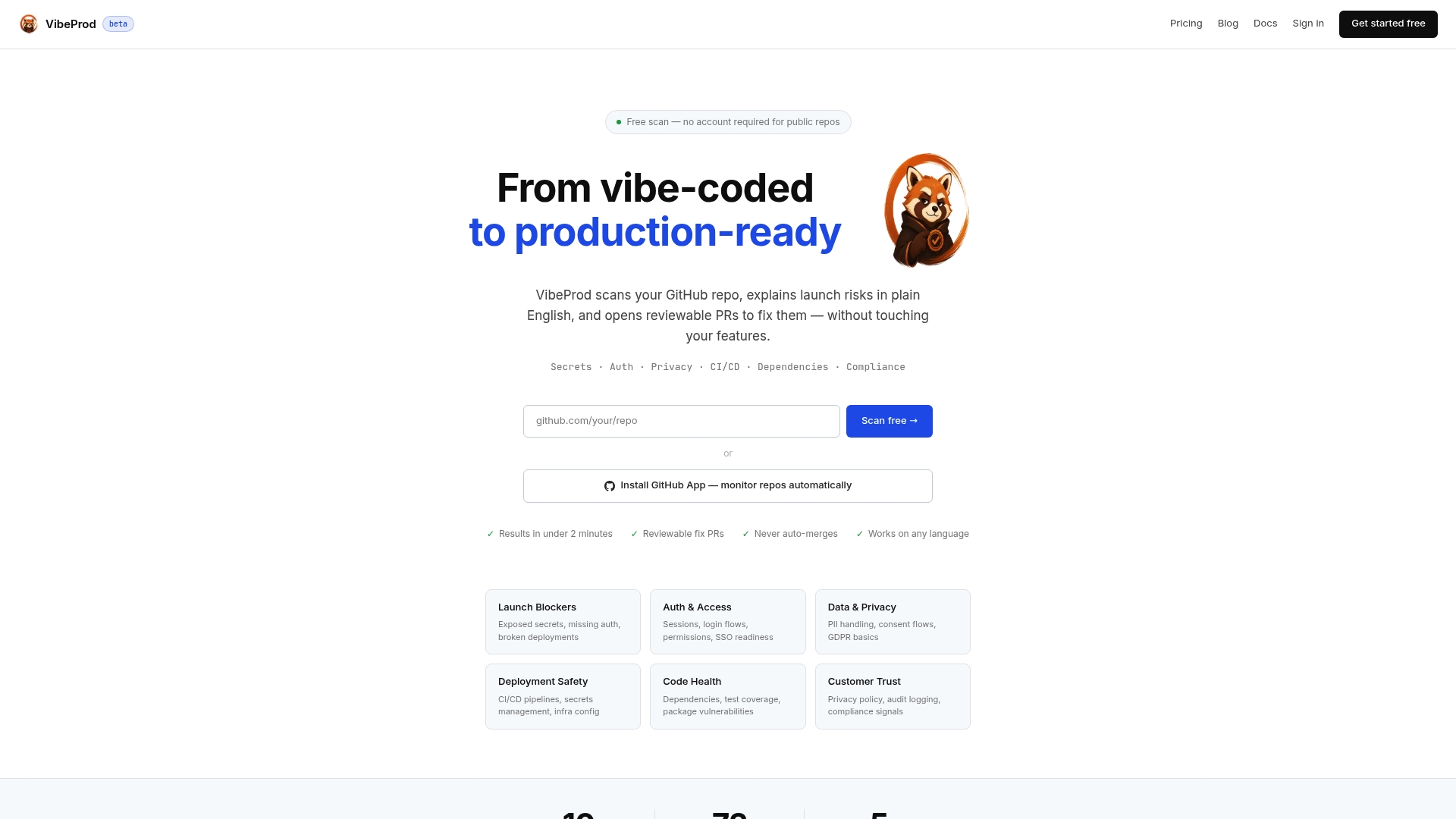
Vibeprod scans your GitHub repositories for launch risks, including exposed secrets, authentication gaps, and infrastructure misconfigurations, then opens reviewable pull requests with plain-English explanations of what’s wrong and why it matters. Nothing merges automatically, so every fix goes through the same human review your Qualified Individual should already be documenting. The output maps directly onto what §314.4 asks for: scan history, flagged vulnerabilities, remediation pull requests with dates and owners attached. For a small team without a dedicated security function, that’s the difference between scrambling to build evidence after an FTC inquiry and already having it. If you handle customer financial data and want to see where your repositories stand, try Vibeprod and get a plain-English risk breakdown in under two minutes.
Where the Guidance Actually Comes From
For the definitive language, go straight to 16 CFR Part 314 on eCFR, which contains the full statutory text and exceptions. The FTC’s Safeguards Rule resource page offers plain-language FAQs, while its blog post on the notification requirement explains the filing form and effective date in detail.
Where Compliance Programs Actually Break Down
Most Safeguards Rule failures aren’t legal misunderstandings. They’re operational gaps: a development environment that never got the same scrutiny as production, a vendor list nobody’s updated in two years, an incident response plan that exists as a document but has never been tested.
The fix isn’t more policy. It’s tighter integration between your security tooling and your development pipeline, so scanning happens continuously instead of during an annual scramble. Require reviewable pull requests for every fix, keep plain-English remediation notes an auditor can read without a security background, and treat governance, automation, and documentation as three legs of the same stool. Remove any one of them and the program tips over.
— Vibeprod
This article is general information, not a substitute for advice from a qualified lawyer. Consult a qualified legal professional about your own circumstances before acting on anything here.
Sources
- 16 CFR Part 314 – Standards for Safeguarding Customer Information
- FTC Provides Guidance on Updated Safeguards Rule | Federal Trade Commission
FAQ
What are the latest updates to the FTC Safeguards Rule?
The most significant recent update is the breach-notification requirement, which took effect May 13, 2024, and requires notifying the FTC within 30 days of discovering a breach affecting 500 or more consumers. The FTC also issued fresh guidance in 2025 clarifying how the Rule applies to nonbank institutions like motor vehicle dealers.
What are the new FTC rules for businesses?
The amended Safeguards Rule, effective June 9, 2023, requires covered financial institutions to maintain a written information security program with nine specific elements, including a designated Qualified Individual, documented risk assessments, and regular testing and monitoring under 16 CFR Part 314.
What federal legislation includes the Safeguards Rule?
The Safeguards Rule was created under the Gramm-Leach-Bliley Act (GLBA), a federal law governing how financial institutions handle consumer financial information. The FTC implements and enforces it through 16 CFR Part 314.
What are the three key rules of GLBA?
GLBA’s three core components are the Financial Privacy Rule, which governs collection and disclosure of consumers’ financial information; the Safeguards Rule, which requires a written information security program; and the Pretexting Provisions, which prohibit obtaining personal information through false pretenses.
Does the Safeguards Rule apply to small businesses?
Yes, if your business meets the activity-based definition of a financial institution, though §314.6 exempts entities holding information on fewer than 5,000 consumers from certain written risk assessment and reporting requirements.